Mario Rafael Becerra Dueñas

Three short SCORM cases, each built around one decision

Each case started from a problem that a slide course would not fix. Each one puts the learner in the software where the decision is made: an email inbox, an agent desktop on a live call and a procurement system.

I built them as short SCORM courses for an LMS, and on this page each one opens straight in the browser.

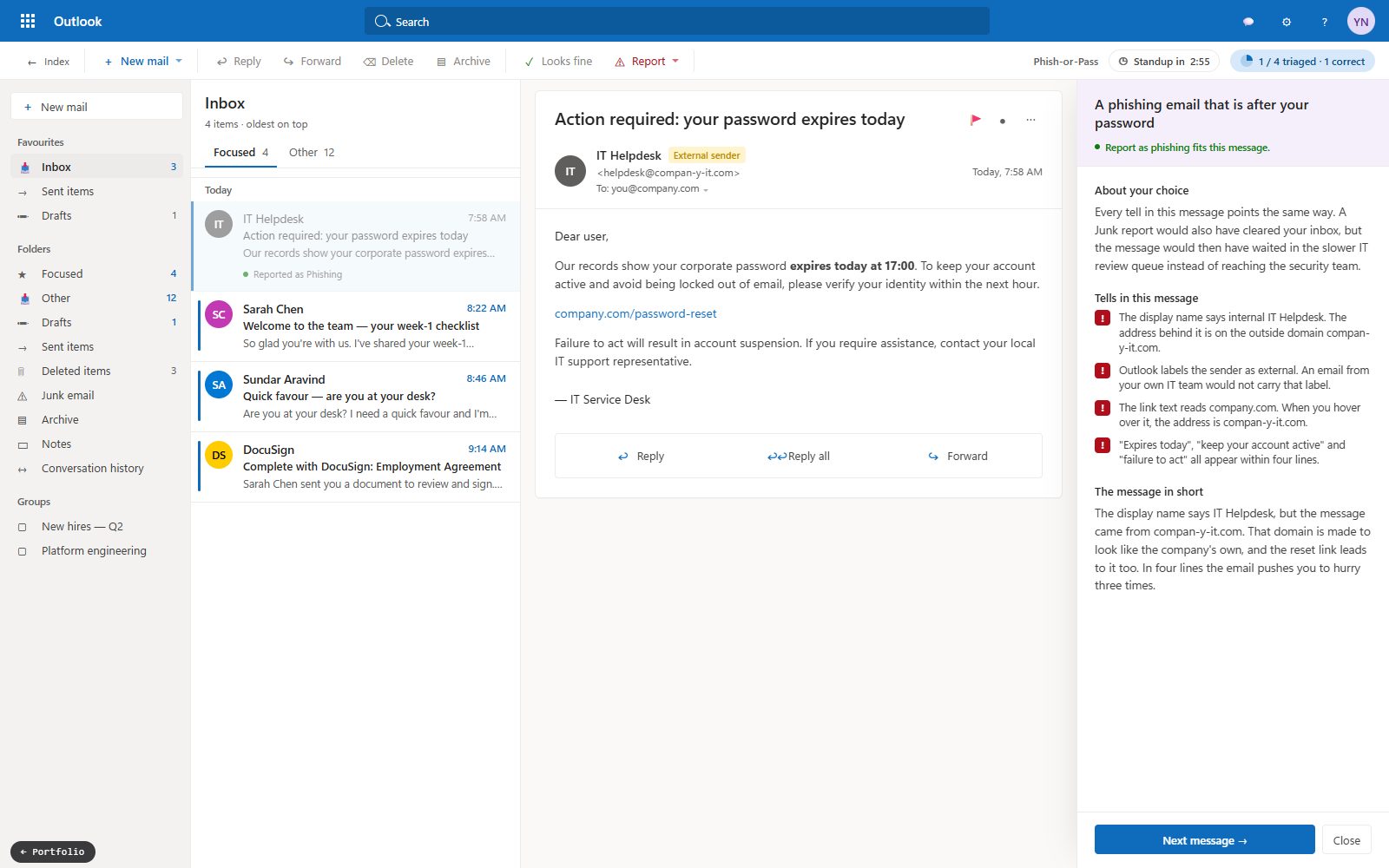
Phish-or-Pass, a new hire’s first inbox

I wrote this for new hires in their first week, who join in onboarding cohorts of 8 to 15 a month. Their general awareness training taught them to report anything that looks transactional. They report genuine mail as readily as real attacks, and the security team ends up sorting noise.

I want them to judge each message on its tells: the display name against the real address, the link under the cursor, and whether the message was expected.

The case runs in a copy of the Outlook inbox, where that decision is made. One of the four messages is a genuine DocuSign envelope that Sarah from People Operations announced an hour earlier, and nobody passes without keeping it.
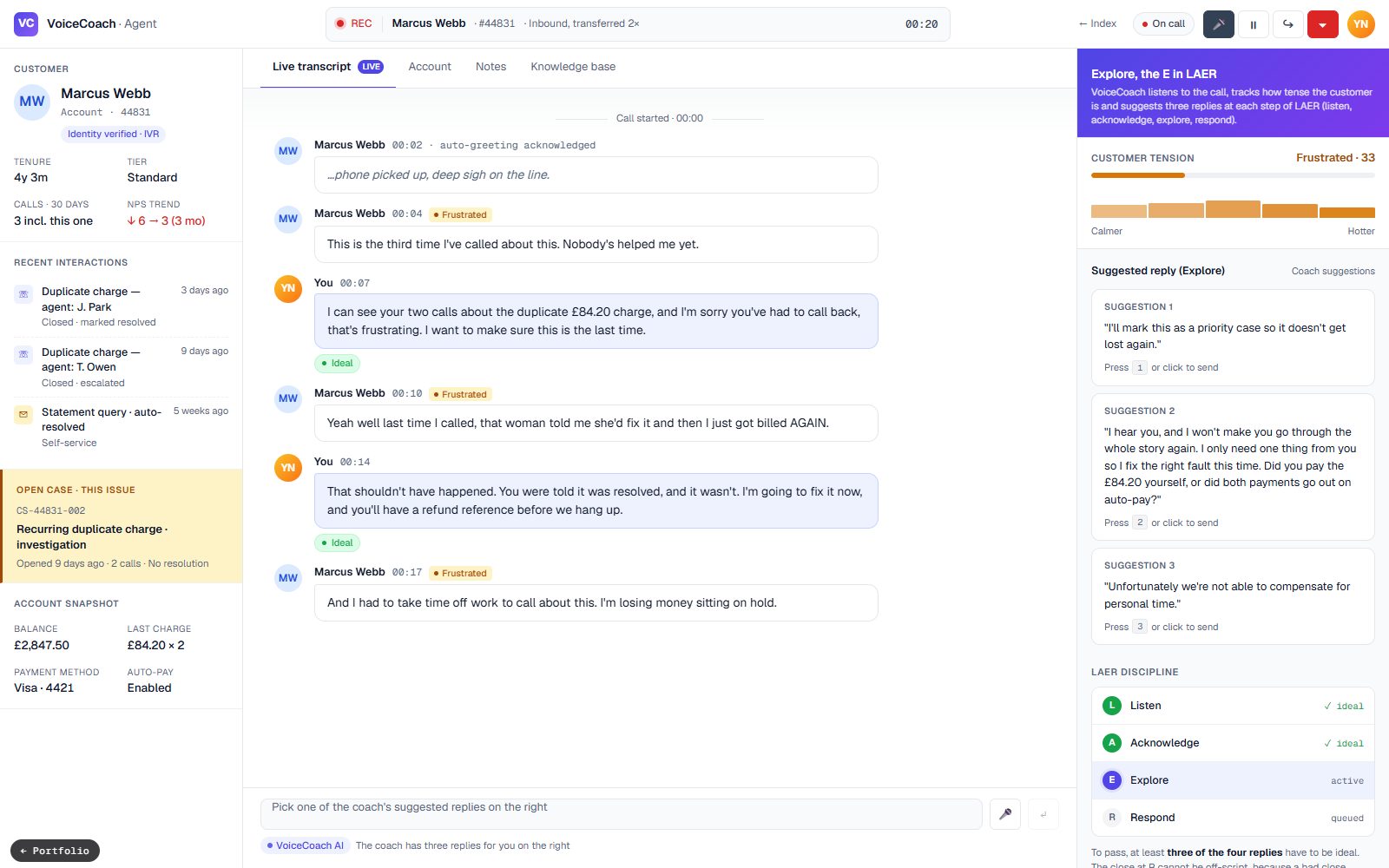
First-30-Seconds, the third call from a customer charged twice

This case is for contact-centre agents who take escalated billing calls. The caller, Marcus Webb, is on his third call about a duplicate £84.20 charge that the last agent marked as resolved. Agents who follow a memorised script treat him as a new caller, explain the charge away or transfer him again.

I wanted them to keep to LAER while he is angry: show they can see his history, name the specific failure, ask the one question that finds the fault, and close with an amount, a reference and a timeline they can keep.

At each of the four steps the learner picks one of three suggested replies, and the grades stay hidden until the choice is made. A tension meter rises with every off-script reply and makes his next line angrier.

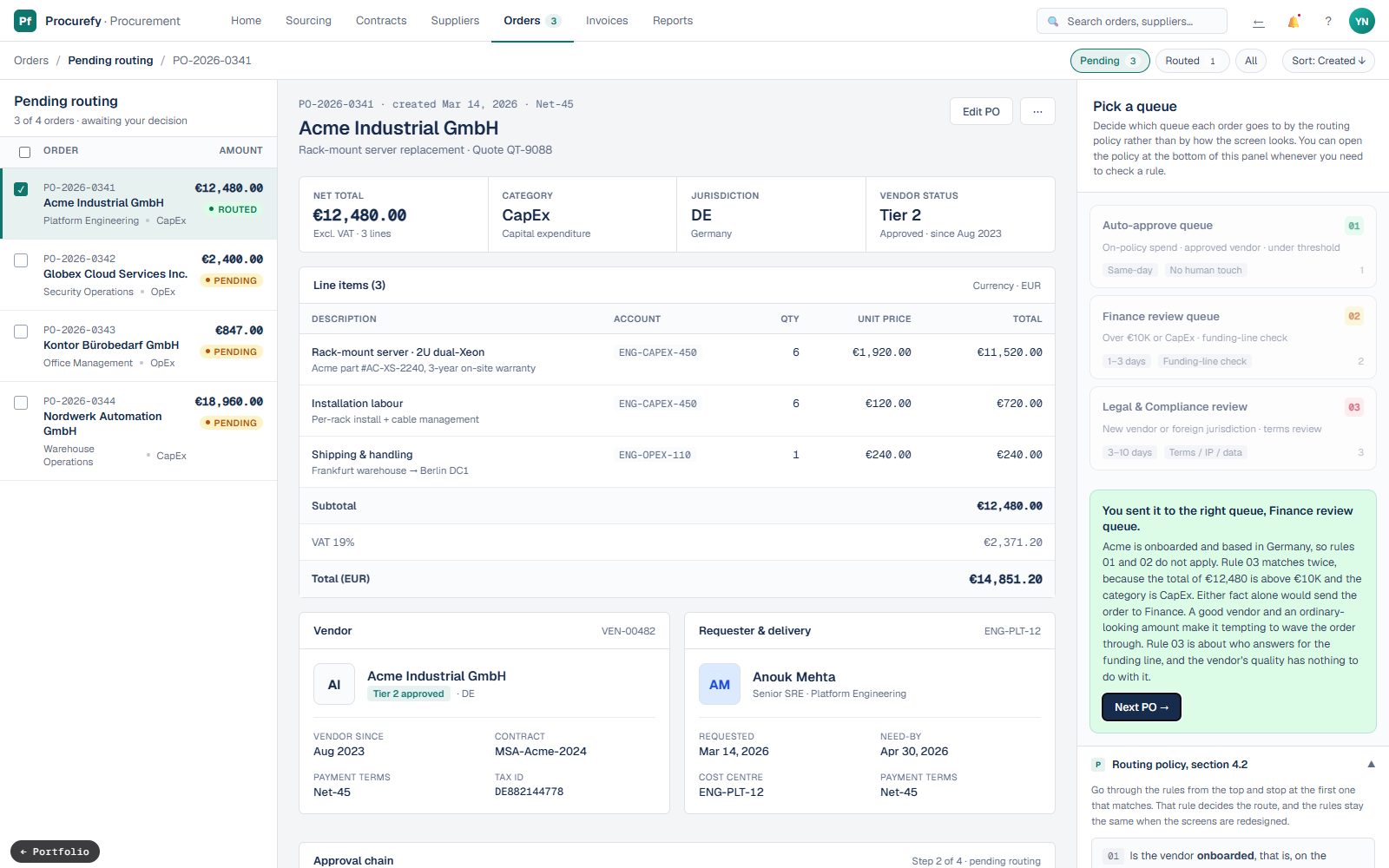
Route-the-PO, purchase orders in a new procurement system

I wrote this for requesters and buyers going live on a new procurement system. Their usual go-live training is a tour of the screens, and it stops being accurate as soon as the interface changes.

The course teaches four routing rules applied from the top, and the first rule that matches decides the queue. The learner routes four orders on a screen that shows only raw data, starting with a €12,480 order from Acme Industrial.

In the fourth order the amount points to Finance while an earlier rule sends it to Legal, and that is how the case checks that the order of the rules has been understood.